Blog
Take Control of Your Financial Future
Explore Blog

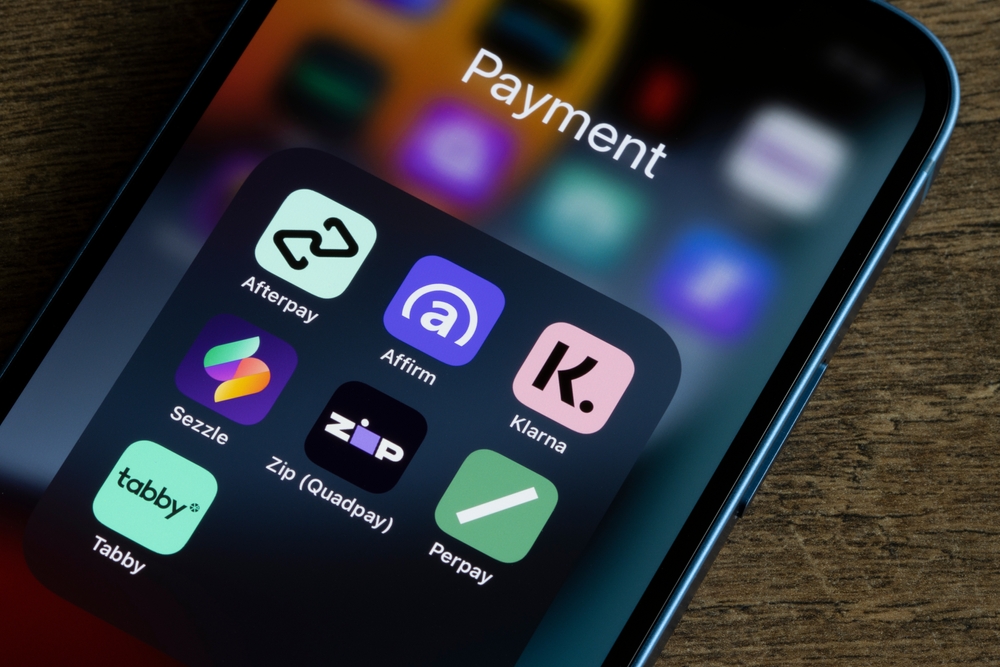

Buy Now, Pay Later (BNPL) services have exploded in popularity over the last several years, and it is not hard to understand why. The pitch is simple: instead of paying $100 for something today, you split it into four easy payments of $25. No interest (usually), no credit check (often), and you walk away with your purchase right now.
On the surface, it sounds like a smarter way to get what you need or want right away, but underneath that simple checkout experience is a shift in how consumers relate to spending and debt, and for many people, that shift is doing real financial damage.
There is a reason BNPL companies frame their offers the way they do. "Only $25 today" sounds very different from "$100," even though the total is the same. Research in behavioral economics has long shown that the way a price is framed dramatically affects how we perceive it, and BNPL is built on that insight.
The result? The debt often does not feel real the same way a traditional credit card balance does. When you see a $1,400 credit card balance, you feel the total all at once when the number stares back at you. BNPL breaks that same debt into fragments distributed across weeks and multiple apps, making it easy to minimize or forget entirely.
This is especially true because most BNPL services operate independently of one another. Afterpay does not know what you owe Klarna. Affirm does not see your Zip balance. There is no single statement, no unified view of what you owe. The debt becomes invisible until the payments start hitting your bank account all at once. While the same can be said about credit cards, BNPL payments don’t register the same way traditional debt does in our minds.
For many people, what started out as a way to make rare, larger purchases more affordable has become the way they pay for small purchases and even necessities like groceries.
Here is where things start to get serious for a lot of people.
This is when things become an actual problem. It is not uncommon anymore to see someone managing five, six, or even more active BNPL accounts simultaneously, often layered on top of existing credit card balances. Individually, each payment may be $20, $30, or $50. Together, they can represent hundreds of dollars in monthly payment obligations that were never budgeted for.
The problem is not any one purchase. It is the cumulative effect of repeatedly telling yourself something is affordable because the payment is small. When you are using different providers, it is easy to lose track of how many payments are actually coming out each month, and when.
For consumers who are already living close to the edge financially, three, four, or five additional monthly payment obligations can tip the balance quickly.
BNPL is often marketed as interest-free, and for on-time payments, that is usually true. But many consumers do not realize how quickly the picture changes when something goes wrong.
Depending on the provider and the plan, missed payments can trigger:
Credit report damage is increasingly relevant as BNPL providers have begun reporting account activity to credit bureaus. A BNPL account that defaults and lands in collections can hit your credit score the same way a defaulted credit card would, which means the short-term convenience of "buy now, pay later" can come with long-term consequences.
If you are concerned about how your BNPL use may be affecting your credit, one of our Certified Credit and Debt Advisors would be happy to review your credit report for you and provide a breakdown.
BNPL adoption is highest among younger consumers. Many Gen Z consumers are already navigating a financial environment that feels discouraging. Home ownership feels out of reach. Student loan balances are significant. The cost of living is high. These are real pressures, and the financial pessimism that comes with them is understandable.
But what is troubling is the pattern that sometimes follows: when long-term financial goals feel impossible, it can be tempting to focus entirely on the present. And BNPL makes present-focused spending very easy.
The risk is that this creates a self-reinforcing cycle. Using credit and BNPL plans to supplement income or smooth over financial gaps does not solve the underlying problem; it adds to it. The debt accumulates, the payments compound, and the financial goals that already felt out of reach become even harder to pursue.
It's not hard to understand why BNPL providers have become so popular. But the problem is (as it is with many kinds of debt), you can’t afford the things you’re purchasing, whether you’re paying for it with credit cards you can’t keep up with, or breaking it into four easy BNPL payments.
If you want to conquer your overspending, the first step is to have an honest look at what you’ve spent in the last 3 months (or longer). Review your bank statements, credit card statements, and BNPL accounts, and for every transaction, ask yourself, " Would I still buy that today? Was it something I needed, or just filling the urge to buy something?
We’re not suggesting that you should never buy something you want. We’re pointing out that many of us will buy things emotionally that, in the end, we’d rather have the money back for. This is the type of self-assessment that will open you up to change.
Not sure if your BNPL habits are a concern? Consider these warning signs:
Buy Now, Pay Later was designed to make spending easier, and it succeeds at that, sometimes too well. The psychology behind BNPL removes friction from the purchase decision, breaks debt into invisible fragments, and makes it easy to overcommit without realizing it until the payments start stacking up.
For people already managing tight budgets, student loans, or existing credit card debt, BNPL can add meaningful financial strain quickly. And when payments are missed, the consequences, including fees, interest, collections, and credit damage, can be serious.
If your overall debt has become difficult to manage, you do not have to figure it out alone. We have been helping consumers get out of debt and back on solid financial ground for decades. We can review your full situation and help you build a plan that actually works.
Buy Now, Pay Later (BNPL) is a short-term financing option that lets you split a purchase into several smaller installments, typically four payments over six weeks. Providers like Afterpay, Klarna, Affirm, and Zip have integrated directly into the checkout process at thousands of retailers, making it easy to use at the point of purchase. Some plans are interest-free if paid on time; others charge interest or fees, particularly for longer-term financing.
It depends on the provider. Some BNPL companies do not report to credit bureaus for on-time payments, while others do. However, if you miss payments or default, that activity may be reported and will negatively affect your credit score. It is worth reviewing the terms of any BNPL plan before using it.
Used occasionally and intentionally, BNPL can make sense for some consumers, particularly for a planned purchase where the installment schedule is clear, the payments fit comfortably in the budget, and there are no fees involved. The trouble tends to arise when BNPL becomes a regular substitute for cash, is used impulsively, or is stacked across multiple providers without a clear picture of total obligations.

-min.avif)






.webp)
