
Blog
Take Control of Your Financial Future
Explore Blog

You open your credit card statement.
Balance: $5,000
Minimum Payment Due: $125
You think, “Okay. I can handle that.” You pay the $125, feel responsible, and move on. But here’s the uncomfortable truth: That feeling of relief is exactly what keeps millions of Americans in credit card debt for years- sometimes decades.
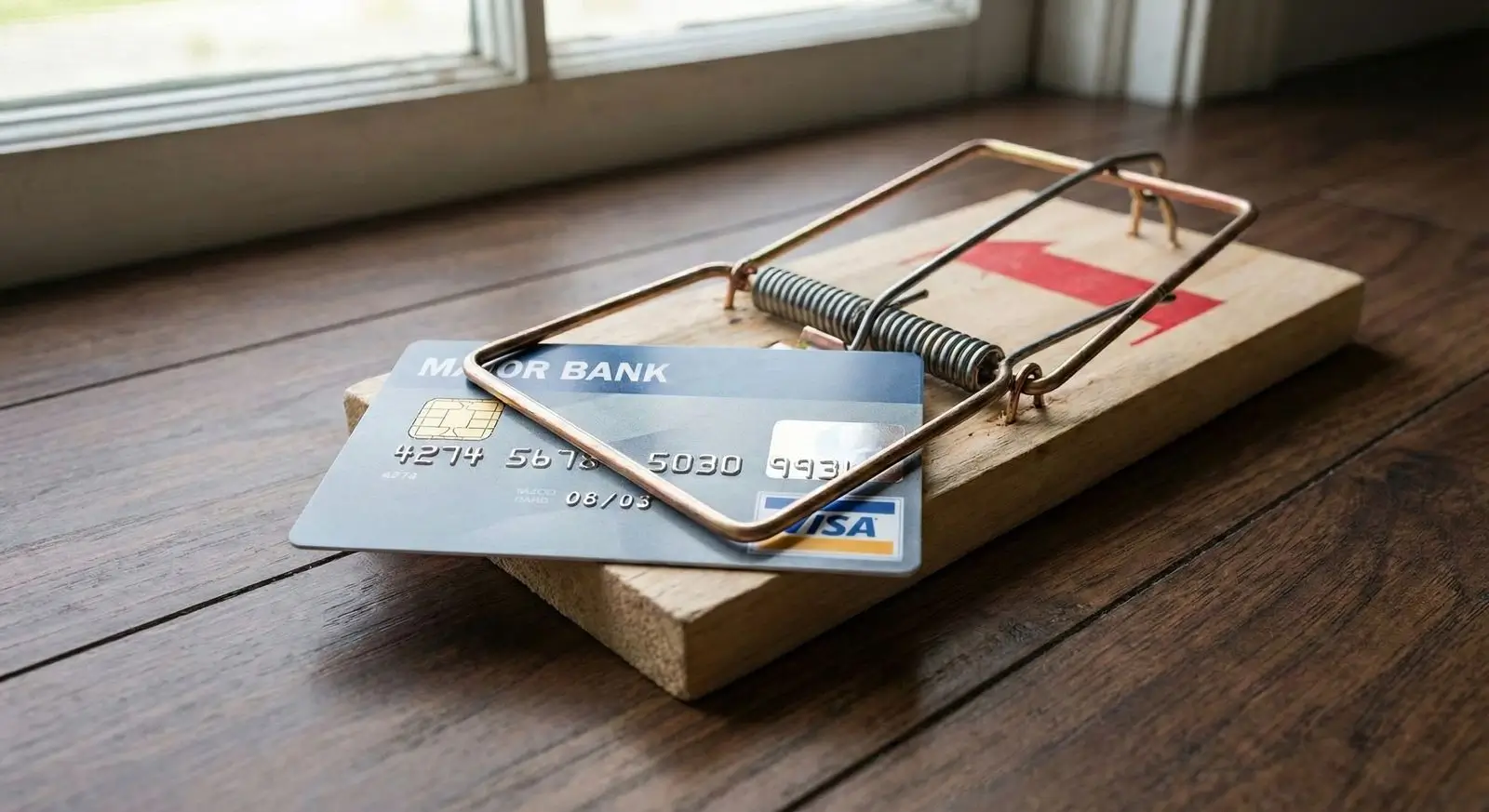
The minimum payment isn’t just a number. It’s a psychological trap.
Credit card companies understand human behavior remarkably well. The minimum payment isn’t random. It’s behavioral design.
Let’s break down what’s happening in your brain:
In psychology, anchoring occurs when we rely too heavily on the first piece of information presented.
On your statement, the minimum payment is often boxed, bolded, and placed front and center.
Your brain sees $125 before it fully processes $5,000. Without realizing it, your mental question shifts from: “How much of this balance should I eliminate?” to “Can I afford $125?”
That subtle shift reduces stress, but it also reduces urgency. The anchor lowers your perception of the problem. And when a problem feels smaller, we respond smaller.
When you make the minimum payment, something powerful happens neurologically.
Your brain releases a small hit of dopamine, the same reward chemical triggered when you complete a task. You feel accomplished. The problem? You may not have meaningfully reduced your debt. With interest rates often hovering around 20% or more, a minimum payment may cover mostly interest and only a sliver of principal. You’re moving… but the treadmill is moving faster.
Financially, you’re barely gaining any ground. Psychologically, you feel productive. That disconnect is the trap.
There’s another mental shortcut at play: optimism about our future selves.
We tell ourselves:
Behavioral research shows we treat our future self almost like a different person someone more disciplined, more organized, and better paid. That makes it easier to push real progress into the future. But month after month, that future never arrives the way we imagined. And the balance quietly grows.
Let’s make it concrete. Consider a $5,000 balance at 22% APR. If you pay only the minimum each month (typically calculated as 1-2% of the balance or $25, whichever is higher), you could be looking at
The minimum payment protects your account status. It does not protect your financial future. That’s a critical distinction.
Willpower alone isn’t enough. You’re not fighting laziness, you’re fighting behavioral design. Here’s how to retrain your brain.
When reviewing your statement:
Shift the anchor from “minimum due” to “total cost.”
Even an extra $50–$100 per month can dramatically shorten your repayment timeline.
Automation removes the monthly decision-making battle. Less thinking = fewer excuses. You want momentum, not negotiation.
The debt avalanche method involves tacking your highest-interest debt first, and it can save you more money in the long-term. With this strategy, you’ll pay more on your debt with the highest interest rate and continue to make minimum payments on the other accounts, then repeat the process as each gets paid off. You’ll still get the dopamine hit of making minimum payments, but will actually chip away at your debt with this more structured approach (as long as you stick with it).
Sometimes, the reality is this: You can’t out-discipline a 25% interest rate.
If multiple balances, high interest, and tight cash flow are working against you, structural change becomes more powerful than small tweaks.
If stopping using your credit cards feels impossible, that's where a repayment strategy can help. At Family Credit Management, we often help clients move away from the endless minimum-payment cycle through programs like:
Instead of guessing each month, you follow a defined path forward to stay out of debt. And a defined path reduces stress.
The minimum payment isn’t evil. It’s just incomplete. It protects you from penalties, but not from prolonged debt. Your brain loves the relief of paying the minimum. Your financial future does not.
If you’re feeling stuck in the cycle, it doesn’t mean you lack discipline or good financial habits. It means you’re human. The key is replacing short-term psychological comfort with long-term financial clarity.
That shift changes everything.
In a true short-term emergency, yes. It can protect your credit and prevent fees. But it should be a temporary strategy, not a long-term plan.
While paying only the minimum credit card payment does not directly hurt your credit score, as on-time payments prevent negative marks and maintain a positive payment history, it does indirectly hurt your score because it keeps your credit utilization ratio high, as the balance decreases very slowly while interest accrues.
Even small increases help! A good starting point is adding 10-20% above the minimum if your budget allows. The more you can consistently apply to principal, the faster you’ll see progress.
If any of the following sound familiar, it may be time to explore working with a non-profit debt management organization (like us!) to get your debt under control:

-min.avif)





.png)
