

Received a collection notice for a debt you don't recognize, or one where the balance doesn't look right? Before you send any money, you have the right to ask the collector to verify it.
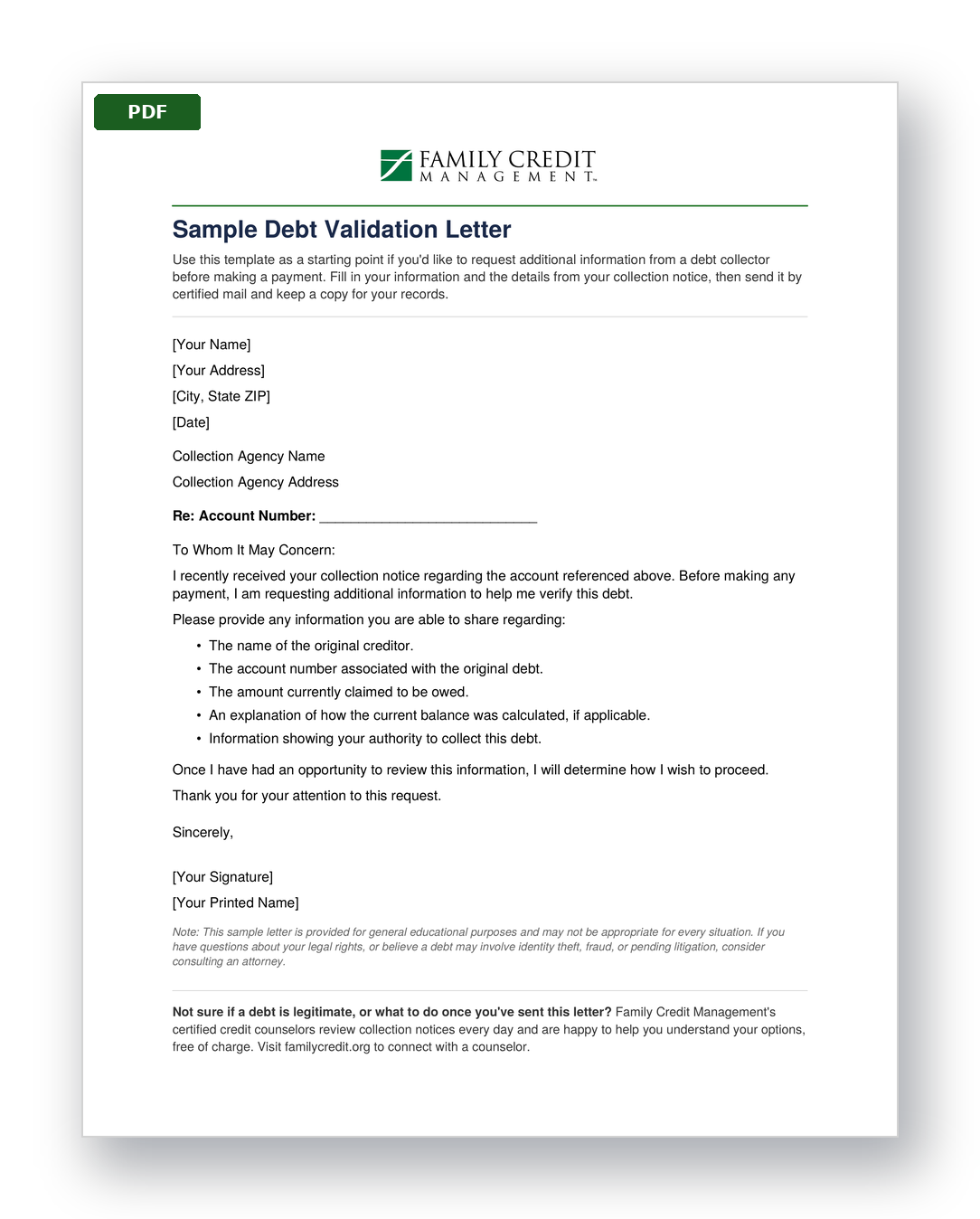
This free Sample Debt Validation Letter shows you what that request can look like. Use it as a starting point, then customize it with your own information and the specifics from your collection notice before sending it by certified mail to help protect your rights and keep a clear paper trail.
Want to understand how the process works first? Read our full guide on debt validation letters which walks through when to send one, what to expect afterward, and when it's time to talk to a certified credit counselor instead.
Click the download button above for your own copy.
.svg)
-min.avif)
Not Sure Which Option Is Right For You?
FAQs
Not necessarily. If you already recognize the debt and know the balance is accurate, validation may just add an extra step. It's most useful when something about the debt is unclear or doesn't match your records.
Federal law provides specific, time-sensitive windows for requesting validation after your first notice, so it's best not to wait if you have questions about a debt.
If a collector can't provide documentation supporting the debt, they're generally required to stop collection activity, though outcomes can vary by situation.
If you're confident the debt is yours, the balance is correct, and you're ready to resolve it, moving straight to a repayment or settlement conversation may save you time.
Yes. Validation confirms accuracy, but it doesn't eliminate a creditor's legal options if a debt remains unresolved.
Not automatically. If a collector can't validate the debt, it may eventually be removed, but validation itself isn't a guaranteed path to credit report changes.
More resources


.webp)