The holidays are supposed to be merry, bright, and maybe a little stressful, but not because someone drained your bank account while you were trying to buy a peppermint latte. Unfortunately, this time of year brings a spike in scams designed to take advantage of busy shoppers, generous families, and anyone feeling the crunch of holiday expenses.
Scammers are constantly getting smarter. They're using AI tools to create professional-looking messages with perfect grammar, making fake emails and texts harder to spot than ever before.
Here's a straightforward guide to the most common holiday scams, how they work, and how to keep your money (and your peace of mind) safe.
1. Fake Online Stores & "Too Good to Be True" Deals
When the price looks like a Christmas miracle, assume it's not.
Scammers create professional-looking websites offering unbelievable discounts on popular gifts, such as gaming consoles, designer items, and electronics. You check out, the money leaves your account instantly, and the package never ships.
How to protect yourself:
- Stick to reputable retailers or brands you recognize.
- Check the domain carefully. Scammers use URLs like Target-Deals-USA.com instead of Target.com.
- Check how old the website is using tools like WhoIs. If the site was created two weeks ago, it's a scam.
- Look for secure checkout (https:// and the little lock icon).
- Use a credit card, not a debit card (if you can afford to pay off your balance at the end of the month!) Credit cards offer significantly stronger fraud protection if you are scammed.
2. Delivery Notification Scams (Smishing)
This one skyrockets every December.
You get a text or email saying, "Your package is delayed. Click here to update delivery info," or claiming you owe a "redelivery fee." The link leads to a phishing page designed to steal login info, bank numbers, or personal data.
How to protect yourself:
- Never click unsolicited package-tracking links.
- Check shipping status directly on UPS, USPS, FedEx, or Amazon by typing the tracking number into their official app or website.
- Remember: USPS will never send you a text message unless you specifically signed up for text alerts for a specific tracking number.
- Delete messages asking for payment or personal info to "release" a package.
3. Gift Card Scams
If someone demands payment in gift cards, you're not dealing with a legitimate company. You're dealing with a scammer ready to Grinch your Christmas.
They might pose as a retailer, a utility company, your boss, a relative, or even a charity. They create urgency, claiming there's an emergency or immediate need.
How to protect yourself:
- The Golden Rule: No legitimate business, government agency, or utility company will ever ask to be paid in gift cards.
- If you get a request from a "boss" or "relative," call their known phone number (not the number that texted you) to verify.
- Keep your receipts and register cards when possible.
4. Charity Scams & Fake Fundraisers
Scammers know this is the season when people are feeling generous.
Fake charities pop up everywhere: email, social media, texts, even door-to-door. They often use names that sound nearly identical to well-known nonprofits (like "National Cancer Society" instead of "American Cancer Society").
How to protect yourself:
- Check the URL. Legitimate nonprofits (like us!) usually end in .org, not .com or .net.
- Verify any charity on CharityNavigator.org or Guidestar.org.
- Avoid donating through links sent by strangers.
- If someone pressures you to donate "right now," that's a red flag. Any reputable charity should be ok with you doing your homework.
- If someone calls asking for a donation, hang up. Find the organization's official website and phone number online and donate directly if you’d like to give.
5. Holiday Job Scams
Seasonal jobs are a lifesaver for many, and scammers know it.
Common signs of a fake job posting:
- They ask you to pay for training or equipment.
- They want your Social Security number before an interview.
- The pay sounds wildly unrealistic for the work.
How to protect yourself:
- Apply directly through the employer's official site.
- Never send banking information before you're officially onboarded.
- Research the company if you've never heard of it.
6. Bogus "Secret Santa" or "Gift Exchange" Posts
The social media version of a pyramid scheme.
These posts promise that if you buy one gift and send it to a stranger, you'll get dozens in return. Spoiler: you won't.
How to protect yourself:
- Skip any online gift exchange involving strangers, buying upfront, or sharing your address.
7. The "Brushing" Scam (Unexpected Packages)
You receive a package you didn't order. It usually contains cheap items. Sometimes, it includes a QR code asking you to scan it to "find out who sent this gift."
How to protect yourself:
- Do not scan the QR code. This can install malware on your phone or lead to a phishing site.
- Check your bank statements to ensure you weren't actually charged for the item.
- Change your passwords. "Brushing" often means your name and address were compromised in a data breach.
8. Fake Financial Relief & Debt Assistance Offers
This one hits close to home for the clients we serve.
During the holidays, scammers ramp up ads claiming things like "Instant debt forgiveness!" or "Government-approved holiday relief program!" or "Erase credit card balances in 30 days!"
They're fishing for your personal information or trying to rope you into an expensive, for-profit program that could hurt your credit.
How to protect yourself:
- Be wary of anyone promising guaranteed results.
- Never give financial info over text or social media messages.
- Look for accredited nonprofit organizations (like us).
Red Flags That Should Stop You in Your Tracks
- Pressure to act immediately
- Requests for gift card payments
- Poor grammar or weird phrasing (though AI is making this less reliable)
- Misspelled URLs or slightly off domain names
- Social media messages from "friends" that don't sound like them
- Unsolicited calls claiming to be from banks or government agencies
What to Do If You Think You've Been Scammed
- Act fast. Speed is your best defense.
- Contact your bank or credit card company immediately and freeze or lock your cards if needed.
- Change passwords on any affected accounts.
- Report the scam to ReportFraud.ftc.gov.
- Check your credit report for unauthorized accounts.
- Consider placing a fraud alert or credit freeze with the credit bureaus.
If debt or financial strain is why a scam got your attention in the first place, you're not alone, and real, trusted help does exist.
Our trained, nonprofit debt and credit advisors can review your debts, explain your options clearly, and help you build a plan that fits your life, not a scammer's script.
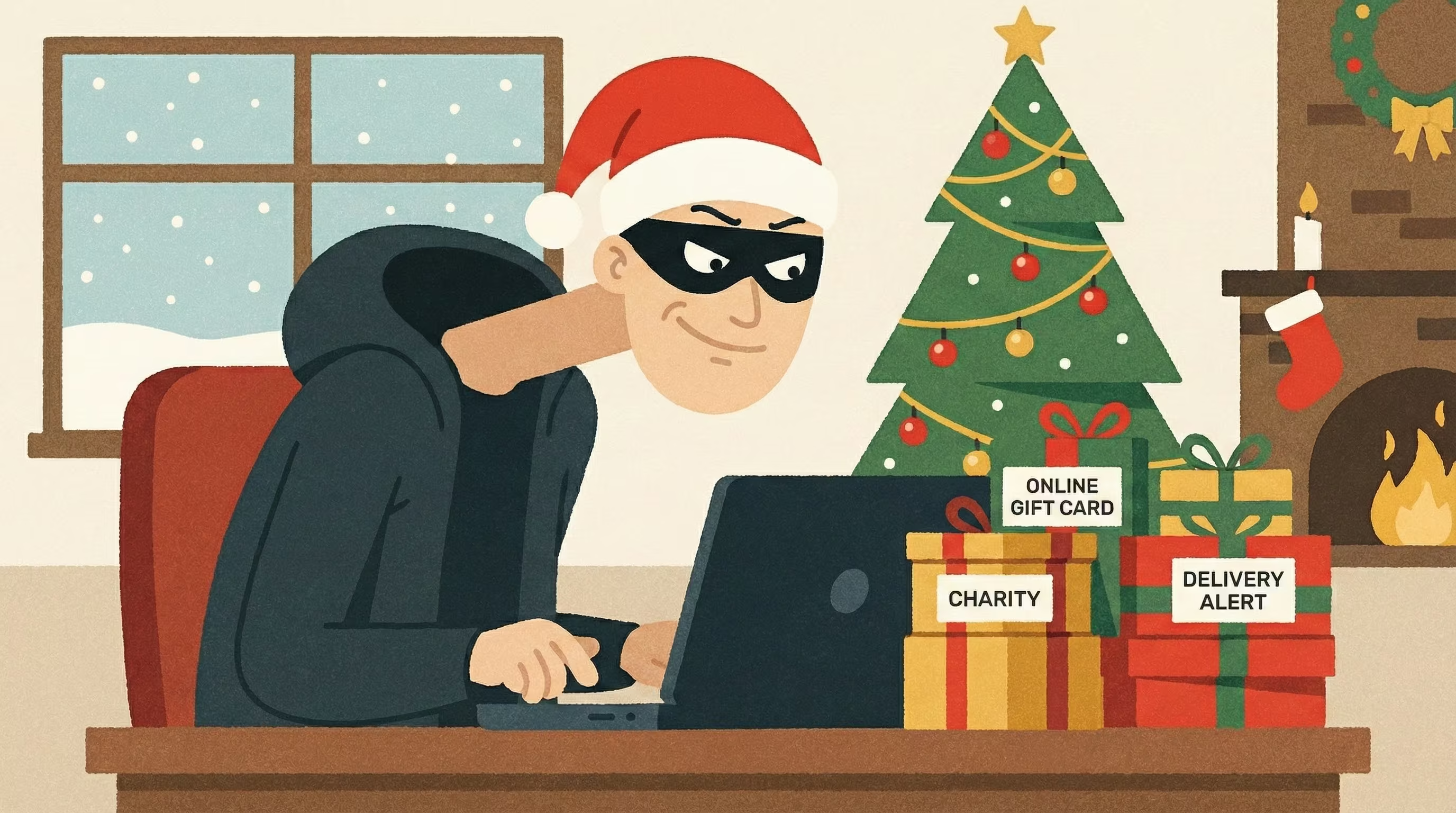
Scammers thrive on chaos, emotion, and the holiday rush. Slow down, double-check, stay skeptical, and protect your information at all costs.
If you need help getting your finances back on track, during the holidays or any time of year, we're here when you're ready.



-min.avif)